


By: Amanda Schupak
From a beef-heavy diet to growing crops that don’t feed people – are the biggest challenges facing the agriculture industry.
Food and the climate crisis are locked in a tangled web of cause and effect. Globally, food systems contribute about a third of all greenhouse gas (GHG) emissions, yet they are also uniquely vulnerable to climate impacts: from soaring temperatures and drought to intense rainfall and flooding.
Food production is caught in a battle between people and profits, as an increasingly industrialized system prioritizes low operating costs and high profits. In the US, nearly 40 million people don’t know where their next meal is coming from and food workers are some of the lowest paid in the country. Agriculture contributes less than 1% to GDP in the US – yet it is responsible for 11% of the country’s GHG emissions, polluted waterways, and millions of acres of degraded land.
“The US is such a huge contributor to climate change and we’re doing so pathetically little to address it, particularly in agriculture,” said Raj Patel, professor of public affairs at the University of Texas, Austin, and IPES-Food expert.
Here we look at five of the biggest food and climate challenges facing the US.
We eat way too much meat and it’s destroying the environment.
The average American eats about 57lb of beef in a year, nearly twice the average of other high-income countries.
When you talk about the environmental problems with the US food system, meat – particularly beef – absolutely dominates the discussion, said Marion Nestle, former chair of NYU’s department of nutrition and food studies. “There are cattle grown in every state, so the meat industry is entrenched in the country. Beef has been the iconic American food for a long time. Nobody wants to give it up.”
But beef is a climate disaster. It takes an enormous amount of land to raise cattle – land that would sequester more carbon as grass that doesn’t get grazed and forests that are not felled for pasture.
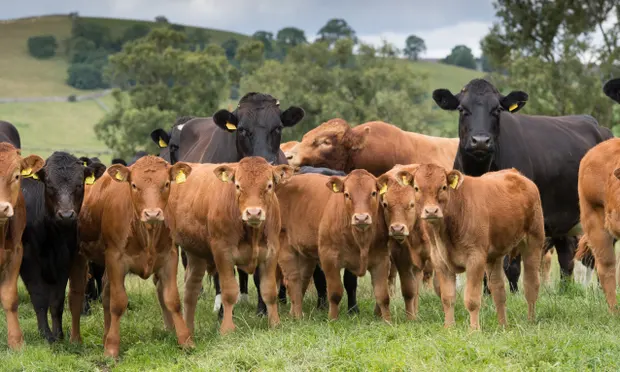
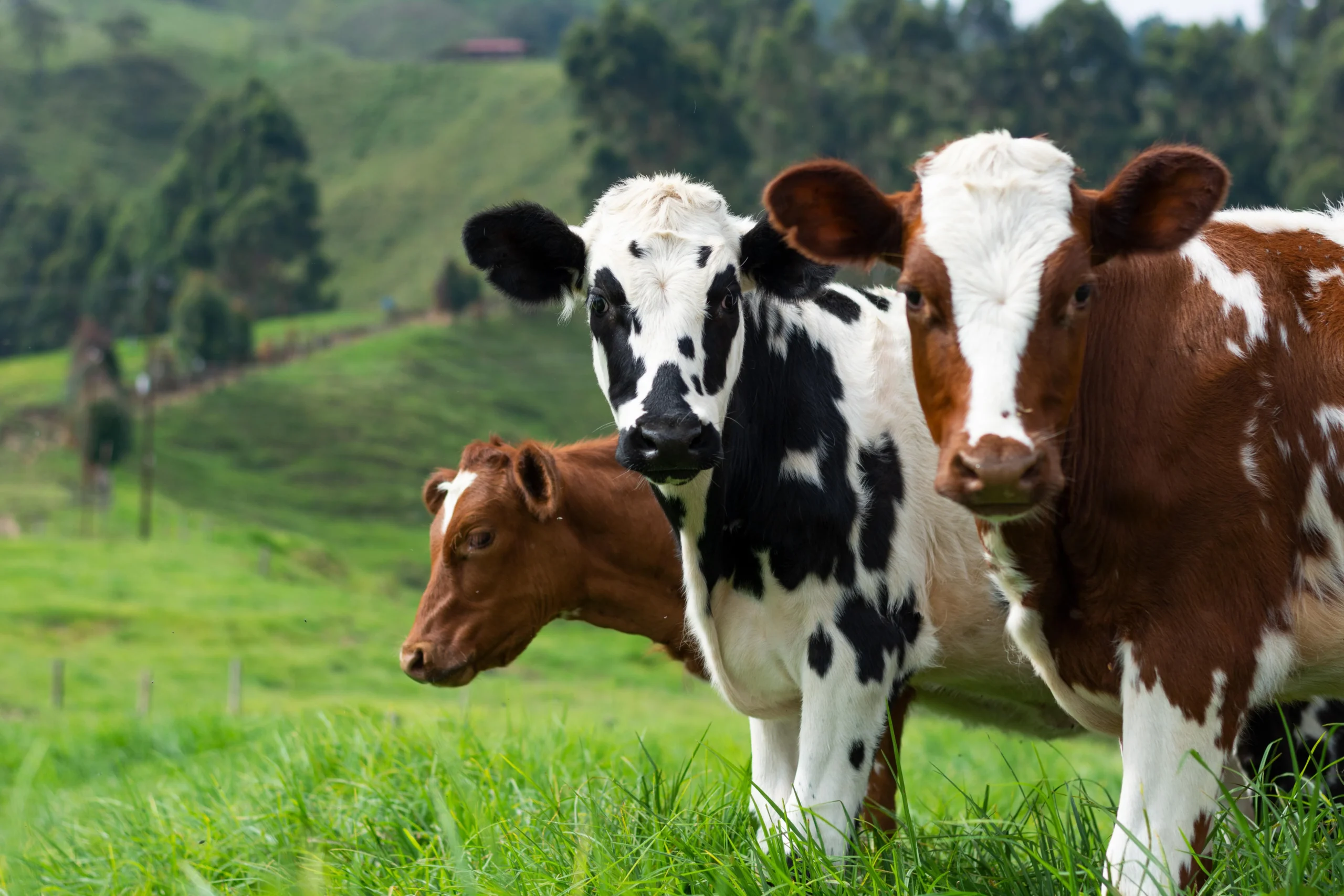
It also takes an enormous amount of food to feed cattle. About 55% of the grain grown in the US goes to fatten cows (and other animals). And as the ruminants chew, they burp out methane, a powerful planet-warming greenhouse gas. Meanwhile, animal waste and fertilizer runoff pollute rivers and poison drinking water supplies.
Eating less meat – primarily beef but pork and chicken, too – would free pasture and cropland, eliminate the suffering of billions of animals and improve human health by restoring clean water and reducing Americans’ calorie and saturated fat intake. Yet it’s an excruciatingly hard sell.
We wildly overproduce food and a lot of it doesn’t feed people.
The US intentionally produces a vast surplus of food. The country’s food supply, which is grown and imported, amounts to about 4,000 calories a day for every adult, child, and infant. “There’s no reason why we should be growing all that food,” Nestle said. “It’s not for us anyway – it’s for animals or automobiles.”
Not only do tons of US crops get turned into livestock feed but a staggering proportion (40% of corn, which accounts for the vast majority of the nation’s crops) is used to make gas for cars – despite the fact the world is supposed to be ushering in the electric car era. The government mandates that ethanol, a renewable fuel typically made from corn, be mixed into gasoline to displace a portion of fossil fuels.
The goal is to reduce fuel emissions, but when you factor in the ecological impact of raising more corn to meet ethanol demand, research has found that the math doesn’t check out. That as much or more corn goes to making ethanol than either feeding people or animals is “clearly bonkers”, said Patel.
Producing biogas from cows’ methane waste is similarly better in theory than extracting fossil fuels. But dairies are cashing in on incentives to convert their emissions into energy, which perversely encourages the expansion of factory farms to generate more waste.
Industrial agriculture exacerbates the climate crisis while making farms – and farm workers – more vulnerable to it.
Ever since the Dust Bowl in the 1930s, American farmers have used fertilizers, pesticides, and machinery to squeeze more and more out of the land, Patel said. That disaster should serve as a warning of what happens when intensive agriculture depletes soil such that it can’t withstand droughts and storms.
Instead, history is repeating itself. As the climate crisis worsens, droughts, hurricanes, and floods increasingly threaten crops. Meanwhile, industrial agriculture continues to pump methane, nitrous oxide, and carbon dioxide into the atmosphere, while weakening soil, crushing biodiversity, and sucking aquifers dry.

This is a shortsighted game plan for the industry, some experts say, and it’s harming farmworkers who are paid meager wages to work in the sweltering heat, inhaling wildfire smoke and pesticides, and meat processors working shoulder to shoulder amid a viral pandemic.
“Industrial agriculture … is bad for everybody. It’s bad for society. It’s bad for the climate. It’s bad for human health. It’s bad for animals. It’s bad for farm workers. It’s bad for everybody except the people who own the land and get rich off it,” Nestle said.
“We could produce less food and do it better,” she said. Organic and regenerative farming, for instance, have climate benefits including carbon sequestration and improved soil quality, but they are more costly and less productive, with higher labor costs – trade-offs big ag beneficiaries are unlikely to make. “Good luck with that,” said Nestle.
A handful of giant corporations control the food system, and they aren’t eager to change things.
While a trip to the store might make it seem like there are a plethora of companies selling food, many are owned by the same huge corporations.
Four companies control 85% of the US meat market. Another four dominate grains. From seeds and fertilizer to beer and soda, a shockingly small number of firms maintain a powerful hold on the food industry, determining what is grown, how and where it’s cultivated, and what it sells for.
Like any business, its priorities are efficiency and profit – and the most efficient and profitable methods are often the most environmentally costly. They incentivize farmers to plant miles and miles of single crops, decreasing biodiversity and therefore resilience to climate disasters and diseases. Planting the same crops season after season depletes the soil, necessitating heavy use of fertilizer.
“Are farmers into saving the planet? Of course, they are,” said Patel. But as long as they are beholden to a handful of big corporations who set commodity prices, they have little leverage to implement more sustainable practices.
“Absent a monopoly power, there’s a reasonable chance to imagine different ways of doing things,” Patel said. If there’s some hope for progress, it’s that “there are a lot of people who are fed up with large monopolies”, he said.
There is some legislative momentum, too. A new proposed antitrust bill would put a moratorium on agribusiness mergers and acquisitions and the Biden administration has pledged $1bn to help small meat producers compete with multinationals.
The government subsidizes ecologically destructive farming. But it doesn’t have to.
The dysfunction in America’s food system is essentially codified in law. The Farm Bill, a 300-plus page document dating back to the New Deal, which dictates a vast range of policies from land use to nutritional assistance for poor Americans, “is crucial to practically everything about our food system”, as Nestle wrote in a 2016 Politico article.
Among the bill’s many provisions are billions of dollars in subsidies and insurance payments for farmers, the majority to support highly polluting industrial commodity agriculture. Almost half of the $424bn doled out between 1995 and 2020 went to just three crops: corn, wheat, and soybeans.

Some sliver each year rewards largely unmonitored and temporary conservation practices. None support “specialty crops”, which Nestle said is code for “fruits and vegetables”.
Because subsidies are proportionate to production levels, they favor large operations and promote overproduction. “We subsidize things that are damaging to the environment,” said Matthew Hayek, assistant professor of environmental studies at NYU. Instead, he argued, subsidies should be tied to environmental stewardship, or farms should be taxed for negative ecological impacts.
“The kind of reforms that would improve things considerably is not revolutionary,” said Silvia Secchi, an economist, and geographer at the University of Iowa. Reducing the ethanol mandate, paying farmers to convert land to grassland, and requiring environmental impact reporting would be “incremental first steps” to reducing agriculture’s climate footprint.
“There are lots of things we could be doing to get us on the right path,” she said.