


Over the past decade, the basic facts of how we produce meat and its harms to society — its acceleration of the climate crisis, the torture of tens of billions of animals, hazardous workplace conditions for meatpacking workers — have begun to enter the realm of public consciousness.
That’s led, in part, to a quarter of Americans — perhaps that includes you — telling pollsters they’re eating less meat (even as US consumption rises). But in a world with a population nearing 8 billion, does one person changing how they eat even make a difference for animal welfare or the climate?
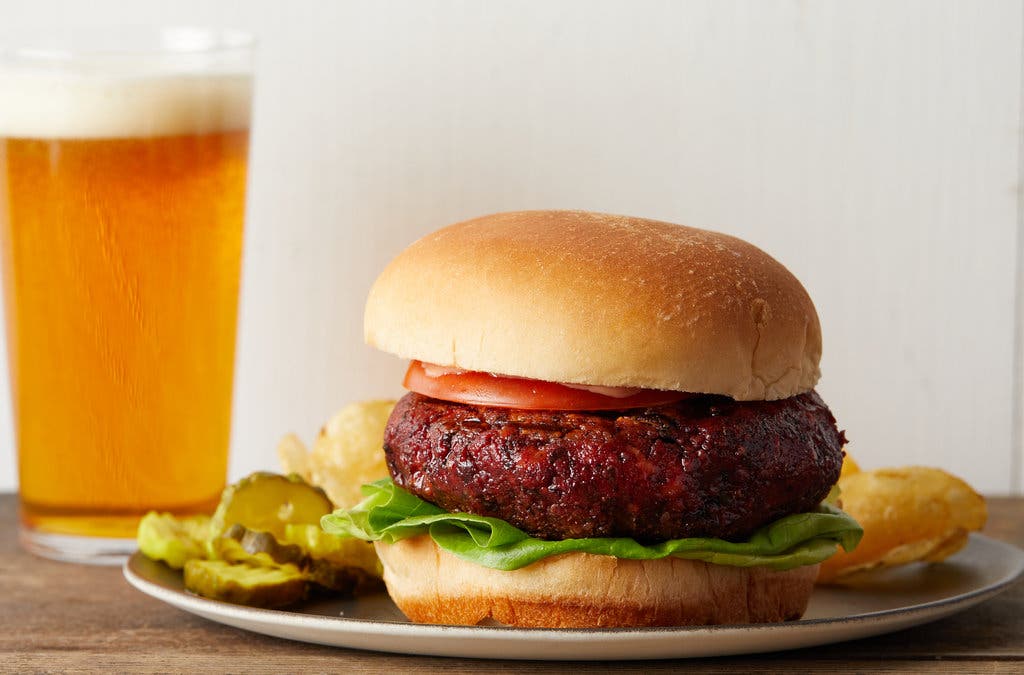
Some critics say no, arguing that putting the onus on individual consumer choice is a dangerous distraction from systemic change. “We are not going to fix the climate crisis by shaming largely powerless individuals or getting men in the west to eat more plant-based burgers; it can be fixed only through systemic change,” wrote Guardian columnist Arwha Mahdawi. In this line of thinking, policy, not personal choice, is what will ultimately move the needle.

The systemic change critics have a point. Changing corporate and governmental policy is no small feat, but it’s likely a more plausible path toward meaningfully reducing greenhouse gas emissions than the Sisyphean task of convincing one person at a time to change their lifestyle.
But one worry I have is that this mindset may be pushing things too far — to the point of dismissing the value of any individual action. And it might even obscure an obvious fact: that there’s not really a trade-off here.
Jonathan Foley, a climate scientist and executive director of Project Drawdown, a nonprofit that analyzes and advocates for climate solutions, says it’s not an either/or choice. “I just never understood that false dichotomy,” he told me. “It’s inaccurate, it’s wrong, and it leaves a lot of tools off the table. And I think it makes a lot of people feel really depressed. If our hope is tied up in the US Senate to save us, and that’s it, we’re screwed.”
It’s easy to feel exhausted thinking about all that we should do to live more sustainably, but not all actions have an equal impact. Choosing just one or two of the more impactful ones — and not worrying too much about the rest — might reduce some of that stress. And according to Project Drawdown, the two most effective individual actions are food-related: reducing food waste and eating a “plant-rich” diet — one that contains less meat and more plant-based ingredients than the typical American diet.

Just eating a plant-rich diet will reduce more greenhouse gas emissions than if you were to install solar panels on your home, switch to an electric vehicle (or public transit), compost all of your food scraps, and reduce your plastic use, according to the group.
“When it comes to individual action, it’s not a guilt trip — saying we’re the ones responsible for this,” Foley says. “That’s not really fully true or fair. So instead of a guilt trip, call it a power trip. We have power at the individual level.”
Encouraging individual action also gives people who want to effect change an outlet in the face of a polarized political system — one that threatens to subsume food politics into our broader culture wars.
“If you think it’s hard to get Congress or the White House to do anything about greenhouse gas emissions from energy, try talking about beef,” Foley says. “Politicians are terrified of talking about this issue … It’s completely unreachable, even to rural Democrats. The leadership is going to come from states and cities, from culture, from movements, from influencers — it’s going to come from conversations and individual actions.” He thinks better plant-based food technology will play a role, too.

Some of this change is happening. Public schools and hospitals are serving more plant-based meals and around a dozen states have banned cages for some farmed animals. Big food companies are also phasing out cages from their supply chains while adding in more plant-based food, and the alternative protein sector is beginning to receive government funding.
But it will take a lot more of these smaller-scale changes before Washington follows with substantive federal policy. Until then, individual action should serve to complement these efforts, not distract from them.
Ultimately, we don’t have a choice: In 2020, environmental researchers at Oxford University concluded that even if we eliminate all fossil fuel use, we can’t meet the Paris climate agreement’s targets of keeping the rise in global temperature to 1.5 or 2 degrees Celsius above pre-industrial levels unless we also reduce emissions from the food system, over half of which come from meat and dairy.
Despite that warning, the latest IPCC report on climate change doesn’t give plant-based eating its due. The report’s summary for policymakers originally encouraged consumers to switch to plant-based diets, but after lobbying from countries with large meat industries, including the US, that language was changed to the vague advice that consumers shift to “balanced, sustainable healthy diets,” with plant-based eating just getting a nod in a footnote.
With large-scale policy in the face of those challenges seemingly immovable, space for individual agency seems like a good thing to cultivate.
Eating less meat might mean fewer factory-farmed animals
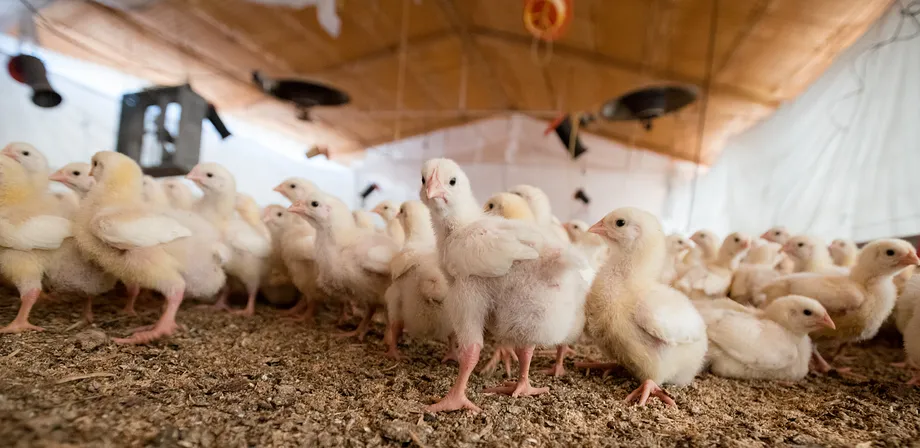
As abstract as talking about greenhouse gas emissions may feel, there’s a more tangible benefit to eating a plant-rich diet — it could reduce the number of animals raised on factory farms.
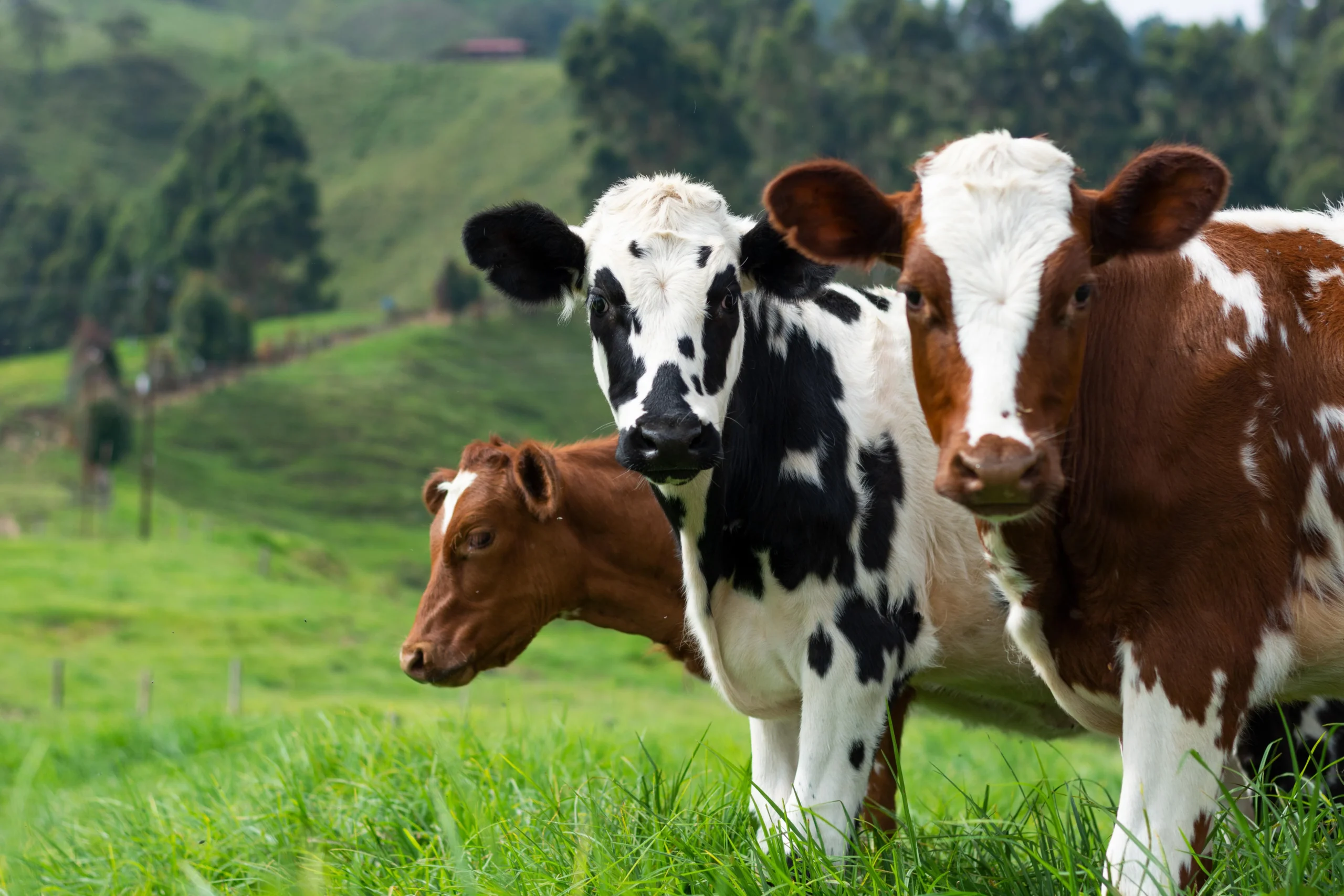
The average American consumes about 25 land animals per year — 23 chickens raised for meat, a third of a pig, a tenth of a cow, and about three-quarters of a turkey (plus a small amount of duck and other species).

Add in aquatic animals — an estimated 12 fish and 137 shellfish (mostly shrimp) — and the number skyrockets up to roughly 174 animals. (The number would more than double if you count other fish affected, like “bycatch” — sea animals accidentally caught and tossed back into the ocean — and the fish caught to feed farmed fish, according to Harish Sethu, a data scientist and author of the Counting Animals blog.)
So, if around 174 animals are farmed and fished a year for the average American diet, does that mean if someone cuts all animal products from their diet, 174 fewer animals will be farmed? The answer is a bit complicated.
“It may be hard to see the consequences of our decisions, but let there be no doubt, each purchase decision matters,” wrote agricultural economists Jayson Lusk and F. Bailey Norwood in their 2011 book Compassion, by the Pound: The Economics of Farm Animal Welfare. “To deny this fact is to contend that every human becoming a vegan would have no impact on the number of livestock raised.”
Lusk is realistic about just how much individual choices matter. “Any individual person is such a small piece of the overall story that me removing myself from the market has a very, very, very small effect on price,” he told me recently. But “if you go from the average [amount of chicken consumption] to zero, it’s a non-trivial consequence on the number of chickens that are out there … so maybe that’s the good news.”
Determining those exact consequences is tricky. Economists try to estimate how demand affects price and supply by measuring the “elasticity” of the supply or demand of a product, or how sensitive the product is to changes in demand and price. According to Lusk and Norwood, avoiding meat does affect the price and supply of meat, milk, and eggs, but not on a 1:1 basis, and elasticity varies among animal products.
For example, if you don’t eat one pound of chicken, they estimate 0.76 fewer pounds of chicken will be produced in the long run; don’t eat a pound of beef, and eventually 0.68 fewer pounds of beef will be produced. (The authors define “long run” as between five and 10 years, depending on the product, with poultry closer to five and cattle closer to 10.)
If you decide to purchase less chicken but someone else decides to purchase more chicken, then your choice to reduce is, in essence, a wash. If you decide to purchase 5 fewer pounds of chicken next month, then your grocery store will have 5 extra pounds to sell — all else being equal — and in the short term might put chicken on sale to make sure it all gets sold, which will make up for your purchasing less.
But if you purchase 5 fewer pounds of chicken every month, it should eventually influence the grocery store to purchase less chicken from its supplier, which will eventually influence meat companies to breed fewer chickens.
The “long run” is important to keep in mind, Lusk says, and it can vary by species. “There are [cattle] breeding decisions being made today that won’t reach our dinner plate until three years, so prices are going to change now but that process was set in motion three years ago.”
Which species you cut back on matters too. Because chickens are so small, we eat a lot more of them — remember, about 23 chickens per year versus one-tenth of a cow per year. If you decide to eat less of any particular animal products, cutting back on products from smaller animals, such as chicken, fish, and eggs, is likely to have a bigger effect on animal welfare than cutting back on beef, pork, or milk.
Lusk also says that larger effects could be observed if large groups of people act together. For example, much of US meat is exported, and when there are animal disease outbreaks and a country temporarily cuts off US meat imports, it will affect meat prices for a period of time. “So it does show that big groups of consumers — if they choose, or if their governments choose, to stop buying a US beef product — it does have significant market impacts here,” Lusk says. “Again, we’re talking about large numbers of people moving at the same time.”
You and everyone you know
Lusk says it’s also important to look beyond just ourselves when we think about the impact of our food choices.
“This question, ‘Does one person’s choice matter?’ — you can look at what choice that has on your individual consumption and how that relates to production. The other way it matters is that it affects the people around you because you’re in a network — you’re in a social environment,” he told me.
He said he’s been conducting consumer surveys for years and a decade ago, around 2 percent of respondents would say they’re vegetarian or vegan. Today? It’s 11 percent. (The change in Lusk’s survey results over time does suggest shifting norms, though 11 percent is much higher than the typical 2 to 6 percent most polls on vegetarians and vegans find.)
“Even if half of those people are not very consistent vegetarians or vegans, the fact that they’re willing to say that on a survey suggests that at least in some groups, the norms have changed enough that people don’t feel ostracized by saying it,” Lusk said.
Changing norms could be especially important to moving the needle on meat consumption. A recent study out of the United Kingdom found that even among those who want to eat less meat, the top barrier to doing so was lack of support from family and friends, a problem that shifting norms would address.
Even if we can’t precisely determine our individual impact, it’s empowering to know that our choices aren’t pointless, and that there’s still something productive for any one of us to do amid political gridlock.
“Each individual may not matter. But individuals collectively matter, and consumer culture matters,” the writer Annie Lowrey argued in a stirring piece in the Atlantic about the importance of consumer and civic behavior to bringing about change. The things we do add up. Do them long enough and they can add up to a different world.