


• Home
  • Team
  • World
  • Cultivated meats
Friday, December 5, 2025
No Result
View All Result
  • Login
Cultivated Food Article and News
  • Cultivated foodTrend
    • All
    • Alternative Meat
    • Alternative Protein
    • Article
    • Cultivated meats
    • Lab-grown meat
    • Plant-based food
    • Seafood
    • Short News

    Chicken Road 2: Il suono che guida la guida silenziosa

    A rapid expansion of the cultured meat market is meeting consumer demand

    Lab-grown meat is in high demand in the APAC region

    The Alternative Protein Revolution: Is India Ready?

    The Alternative Protein Revolution: Is India Ready?

    The Future of Food by 2025

    The Future of Food by 2025

    Cultivated meat is scaled up-and its price is dramatically reduced

    A new partnership with Cult Food Science is bringing innovative meat products to market

    Public Consultation Seeks Feedback on Potential Approval of Cultivated Meat in Australia

    Public Consultation Seeks Feedback on Potential Approval of Cultivated Meat in Australia

    Indians get a taste of cultivated meat at Biokraft Foods

    Indians get a taste of cultivated meat at Biokraft Foods

    A rapid expansion of the cultured meat market is meeting consumer demand

    A rapid expansion of the cultured meat market is meeting consumer demand

    Achieving multibillion-dollar growth for lab-grown meat with Sallea

    Lab-grown meat investments by Asian countries could revolutionize the industry

    • Alternative Meat
    • Alternative Protein
    • Article
    • Cultivated meats
    • Lab-grown meat
    • Plant-based food
    • Seafood
  • World
    AdobeStock_2854144561

    “We’re reimagining meat to spare land and resources, but never flavour” Nicolas Morin-Forest said.

    head-74

    Plant-Based Meats Market Is Booming Worldwide | Gold&Green Foods, Maple Leaf Foods, Amy’s Kitchen, Garden Protein International, Quorn Foods and more

    brown-and-white-cow-on-green-grass-field-during-daytime

    The meat paradox: how your brain wrestles with the ethics of eating animals

    Are chicken feathers a greener alternative to polyester and nylon?

    Are chicken feathers a greener alternative to polyester and nylon?

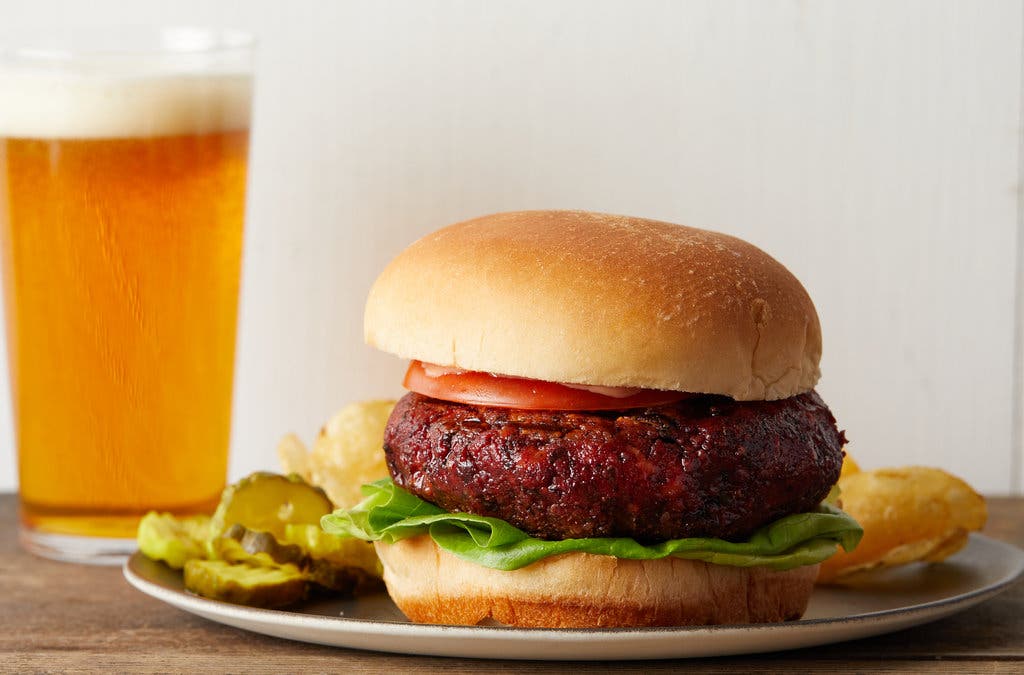
    The Best Veggie Burgers Are Made With Vegetables

    The Best Veggie Burgers Are Made With Vegetables

  • Science
  • Regulations
  • Opinion
  • Short News
  • Business
  • Cultivated Seafood
  • EVENT
  • Technology
  • Cultivated foodTrend
    • All
    • Alternative Meat
    • Alternative Protein
    • Article
    • Cultivated meats
    • Lab-grown meat
    • Plant-based food
    • Seafood
    • Short News

    Chicken Road 2: Il suono che guida la guida silenziosa

    A rapid expansion of the cultured meat market is meeting consumer demand

    Lab-grown meat is in high demand in the APAC region

    The Alternative Protein Revolution: Is India Ready?

    The Alternative Protein Revolution: Is India Ready?

    The Future of Food by 2025

    The Future of Food by 2025

    Cultivated meat is scaled up-and its price is dramatically reduced

    A new partnership with Cult Food Science is bringing innovative meat products to market

    Public Consultation Seeks Feedback on Potential Approval of Cultivated Meat in Australia

    Public Consultation Seeks Feedback on Potential Approval of Cultivated Meat in Australia

    Indians get a taste of cultivated meat at Biokraft Foods

    Indians get a taste of cultivated meat at Biokraft Foods

    A rapid expansion of the cultured meat market is meeting consumer demand

    A rapid expansion of the cultured meat market is meeting consumer demand

    Achieving multibillion-dollar growth for lab-grown meat with Sallea

    Lab-grown meat investments by Asian countries could revolutionize the industry

    • Alternative Meat
    • Alternative Protein
    • Article
    • Cultivated meats
    • Lab-grown meat
    • Plant-based food
    • Seafood
  • World
    AdobeStock_2854144561

    “We’re reimagining meat to spare land and resources, but never flavour” Nicolas Morin-Forest said.

    head-74

    Plant-Based Meats Market Is Booming Worldwide | Gold&Green Foods, Maple Leaf Foods, Amy’s Kitchen, Garden Protein International, Quorn Foods and more

    brown-and-white-cow-on-green-grass-field-during-daytime

    The meat paradox: how your brain wrestles with the ethics of eating animals

    Are chicken feathers a greener alternative to polyester and nylon?

    Are chicken feathers a greener alternative to polyester and nylon?

    The Best Veggie Burgers Are Made With Vegetables

    The Best Veggie Burgers Are Made With Vegetables

  • Science
  • Regulations
  • Opinion
  • Short News
  • Business
  • Cultivated Seafood
  • EVENT
  • Technology
No Result
View All Result
Cultivated Food Article and News
No Result
View All Result
Home Cultivated food

You can now enjoy cultured meat in your kitchen

by Admin
August 18, 2022
in Cultivated food
Reading Time: 5 mins read
0 0
0
0
SHARES
200
VIEWS
Share on FacebookShare on Twitter

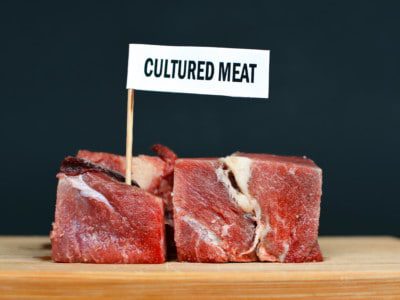
Cultured meat

Researchers at UCLA have created an edible particle that helps make lab-grown meat, known as cultured meat, with a more natural muscle-like texture using a process that could be scaled up for mass production.

Led by Amy Rowat, who holds UCLA’s Marcie H. Rothman Presidential Chair of Food Studies, the researchers have invented edible particles called microcarriers with customized structures and textures that help precursor muscle cells grow quickly and form muscle-like tissues. Edible microcarriers could reduce the expense, time, and waste required to produce cultured meat with a texture that appeals to consumers. The results are published in the journal Biomaterials.

“Animal cells that can be coaxed to form tissues similar to meats could offer a protein source to a world facing food insecurity caused by threats ranging from epidemics to natural disasters,” said Rowat, who is an associate professor of integrative biology and physiology at the UCLA College. “Cultured meat products are not yet on the market in the US and strategies to enable mass production are still emerging.”

cultured

Mass production of cultured meat will involve surmounting several challenges. Current methods can produce a cultured steak that mimics the structure of T-bone, but not at the volume needed for food production. In an animal’s body, the muscle cells most commonly eaten as food grown on a structure called the extracellular matrix, which determines the shape of the mature tissue.

Animal tissue can be grown in a lab using scaffolds made from collagen, soy protein or another material to replace the extracellular matrix. This process, necessary to produce whole tissues resembling steaks or chops, is labor intensive and takes weeks, making it hard to scale up for industrial production. It takes about 100 billion muscle cells to produce a single kilogram, or 2.2 pounds, of cultured meat.

Growing larger volumes of cultured meat at a faster pace involves making a paste or slurry of cells in a container called a bioreactor. Unfortunately, without a stiff substrate, meat grown this way lacks the muscle-like structure and therefore, texture and consistency, of what people are used to eating.

Current types of microcarriers can be used to provide a scaffold for cells to attach to and organize suspension-grown tissues, but they’re inedible and must be removed from the meat before consumption.

UCLA’s microcarriers can be eaten along with the cultured meat they help grow. The structure and texture of microcarriers could be tuned to speed up the growth of muscle tissue and optimize meat texture, Rowat said. The edible microcarriers also supported the growth of bovine muscle cells and yielded beef that browned nicely when cooked.

You can now enjoy cultured meat in your kitchen 190418 chicken satay horizontal 300 1556573740 1

Rowat and her UCLA lab of students and postdoctoral scholars Sam Norris, Stephanie Kawecki, Ashton Davis, and Kathleen Chen, adapted established water-in-oil emulsion techniques to produce edible particles. They used food ingredients including gelatin and transglutaminase, an enzyme that occurs naturally in meat and is mass-produced by bacteria for use as a binding agent in many food products. This helped them create microcarriers of varying stiffness and stabilize the gelatin. To customize the microcarrier surface texture for cell attachment and growth, they devised a way to emboss grooves onto the particles.

The group seeded the microcarriers with mouse precursor muscle cells for an initial test run. They compared the embossed microcarriers to ones with a smooth surface. As a control, they seeded conventional inedible microcarriers with the same type of cells in a separate flask of growth medium. After eight days the cells had formed small clumps. There was no significant difference in the size of clumps on embossed and smooth microcarriers, although cells on the embossed carriers had an initially faster growth spurt.

“We were excited to see a trend toward quicker growth of muscle cells cultured on the grooved microcarriers,” said Kawecki, the study’s co-author who is one of Rowat’s doctoral students. “Any time reduction of cell culture time can significantly reduce the cost of cultured meat production, especially when these processes are brought to scale.”

You can now enjoy cultured meat in your kitchen When will cell cultured meat reach price parity with conventional meat

The internal structure of the tissue grown on edible microcarriers looked more like natural muscle tissue than that grown on inedible carriers, suggesting that the edible microcarriers encouraged more natural growth. Norris, who is a postdoctoral scholar, was surprised to find that cells and microcarriers spontaneously combined to form microtissues that contained a significant amount of myotubes, which are precursors to muscle fibers.

Next, they seeded fresh edible microcarriers with bovine cells and achieved similar results.

“The fact that we can grow large amounts of protein-rich muscle tissue in a stirred bioreactor is a major step in upscaling the production of true cultured meat,” Norris said.

To harvest the tissues, a centrifuge separated the cell clumps from the growth medium. They were rinsed to remove traces of growth medium, compressed into a disc two centimeters, or about 3/4 inch, in diameter, and cooked in a frying pan with olive oil. The cooked patty had the rough, brown surface texture and overall appearance of a tiny hamburger patty.

The researchers said that the microcarrier manufacturing process could be used to produce large amounts of meat quickly and cheaply. The meat of different textures could be produced by manipulating microcarrier stiffness and texture.

You can now enjoy cultured meat in your kitchen 106813711 1608317653050 finish dish 2 2

The edible microcarriers don’t have to be made with gelatin. Plant-based gels, such as agar-agar or animal-free gelatin, could be used, Rowat said.

Reference: Norris SCP, Kawecki NS, Davis AR, Chen KK, Rowat AC. Emulsion-templated microparticles with tunable stiffness and topology: Applications as edible microcarriers for cultured meat. Biomaterials. 2022;287:121669. doi: 10.1016/j.biomaterials.2022.121669

Tags: Alternative ProteinCultivated Foodlab-grown meat
Previous Post

Here are 18 of the best plant-based products made in Colorado

Next Post

The Food Crisis Could Spur Opportunity in This New Food Trend

Admin

Admin

Related Posts

Meat-free-and-low-meat-diets-may-reduce-cancer-risk-according-to-new-study-758x397.jpg

Plant-Based Proteins Market – What Factors will drive the Market in Upcoming Years and How it is Going to Impact on Global Industry

April 21, 2022
0

Plant-Based Proteins Market The Global Plant-Based Proteins Market covers explicit information regarding the development rate, market estimates, drivers, limitations, future based demand, and revenue during the forecast period. The Global Plant-Based Proteins...

Investment trends in startups and food innovation, first protagonists of the B-Venture Pills

Investment trends in startups and food innovation, first protagonists of the B-Venture Pills

May 21, 2022
0

B-Venture is warming up for what will be its seventh edition and it is doing so with a new format, the B-Venture Pills, which aims to give continuity to what has already...

Smash burgers now available in foodservice through Beyond Meat.

Smash burgers now available in foodservice through Beyond Meat.

May 21, 2023
0

By Megan Poinski Brief: Beyond Meat is launching a smash-style burger — called the Beyond Smashable Burger — for U.S. foodservice outlets at the National Restaurant Association Show in Chicago this weekend....

Modern companies use AI to create vegan meat and cheese that is both healthy and tasty

Modern companies use AI to create vegan meat and cheese that is both healthy and tasty

July 23, 2023
0

by ANNA STAROSTINETSKAYA The convergence of artificial intelligence and food development means healthier and tastier vegan meats and cheeses are on the way.  Making meat and cheese by raising and slaughtering animals is...

Load More
Next Post
The Food Crisis Could Spur Opportunity in This New Food Trend

The Food Crisis Could Spur Opportunity in This New Food Trend

Leave a Reply Cancel reply

Your email address will not be published. Required fields are marked *

About US

At CultivatedMeats, we’re passionate about the future of food, products, and events that are grown and produced in harmony with nature. We believe in a world where cultivation goes beyond just farming and enters every aspect of our lives.

Cultivated Meats all right reserved text © 2024

Welcome Back!

Login to your account below

Forgotten Password?

Retrieve your password

Please enter your username or email address to reset your password.

Log In
No Result
View All Result
  • Cultivated food
    • Alternative Meat
    • Alternative Protein
    • Article
    • Cultivated meats
    • Lab-grown meat
    • Plant-based food
    • Seafood
  • World
  • Science
  • Regulations
  • Opinion
  • Short News
  • Business
  • Cultivated Seafood
  • EVENT
  • Technology

Cultivated Meats all right reserved text © 2024