

Milk is an extraordinary substance, packed with all the proteins, sugars, fats, minerals, and vitamins a young mammal needs to flourish until it can eat on its own. Co-opted by humans, cow milk—and to a lesser extent, sheep, goat, buffalo, and camel milk—is a founding food for much of the world, drunk straight, poured over cereal, used to lighten coffee, churned into butter, frozen into ice cream, and baked into desserts. Dosed with rennet—an enzyme produced in a calf’s stomach—it separates into the curds and whey beloved by Miss Muffet, ready to be drained, molded, and fermented into cheese.
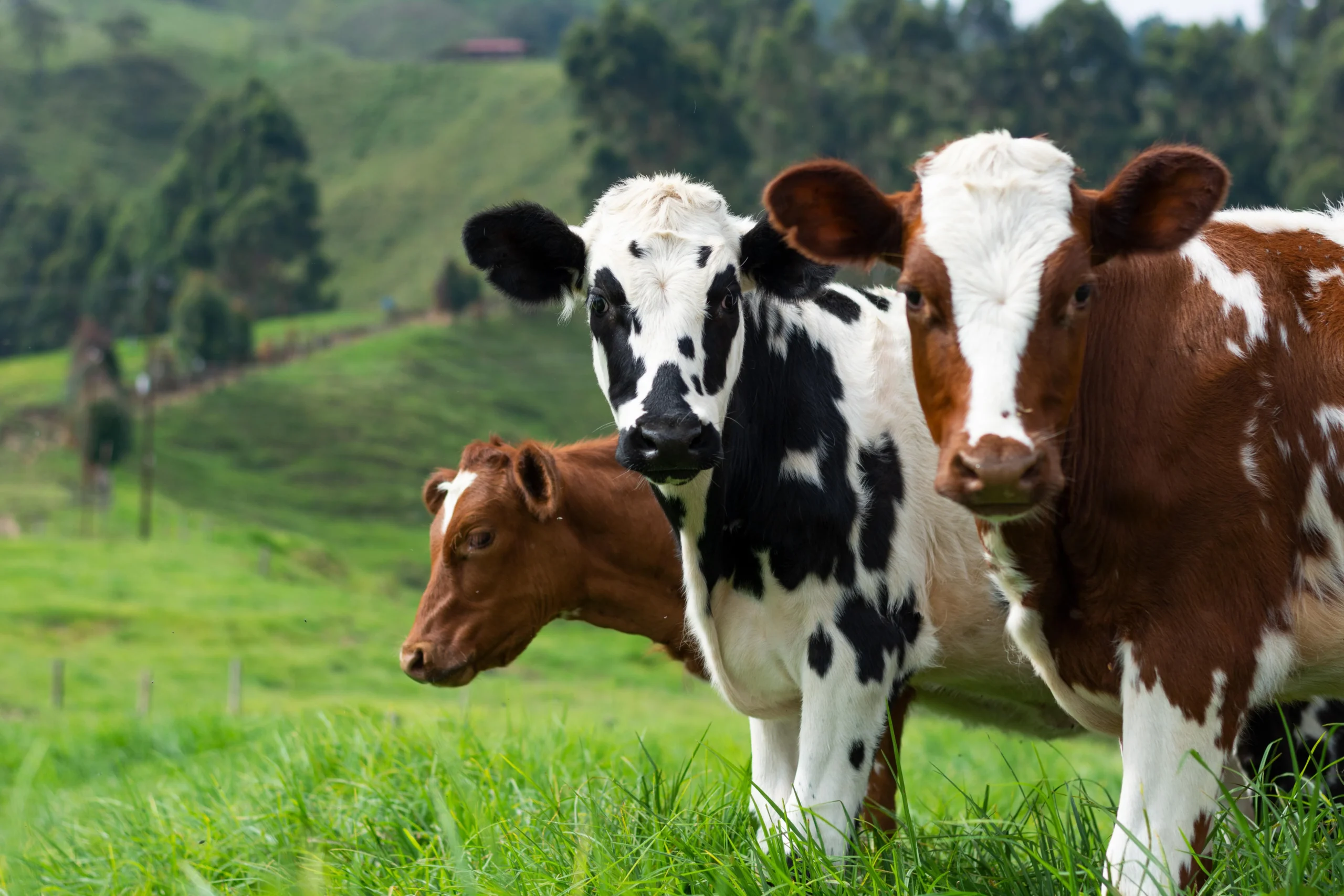
Despite the fact that 68% of the world’s population has trouble digesting lactose, a naturally occurring milk sugar, global demand is surging. Nearly 998 million tons of cow milk (906 million metric tonnes) were produced in 2020, a 27% increase since 2010. But the worldwide herd of some 270 million dairy cows is taking a toll on the environment. Industrial-scale dairy farming contributes to deforestation, polluted waterways, and global warming.
Cows belch methane, a potent greenhouse gas, as they digest their food, and their manure produces nitrous oxides—which have an even stronger planet-warming effect—when it decomposes. In 2015 (the most recent data available), the dairy industry emitted the equivalent of more than 1,700 million metric tons of CO2, 3.4% of global emissions, and on par with aviation and shipping combined. Reducing humanity’s demand for cow milk would go a long way towards reaching the goal of limiting global warming to 1.5°C above pre-industrial levels, thus minimizing the impacts of a super-heated planet.

Soybeans, peas, oats, rice, hemp, and almonds can also be “milked” into plant-based dairy alternatives with a lighter carbon impact, but they still contribute to deforestation and often fail on both nutrition and performance. They are higher in sugar and lower in protein; they curdle in coffee, they don’t bake well, and they don’t have the right fats and proteins to make butter or cheese. If ever an industry were in need of disruption, it would be milk—both the kind from cows and the kind from plants.
That disruption is about to hit supermarket shelves, and it comes from an unexpected source: microbes. Or, more precisely, microbes with the help of Lizanne Falsetto, the woman who introduced high protein energy bars to the world in 1994. Falsetto’s Betterland Milk, which will be available via Amazon in late August and in grocery stores by the end of the year, is produced using precision fermentation, a process in which bacteria, yeast, or fungi are genetically manipulated into producing milk proteins that taste and perform like their dairy analogues, no cows required.
“This milk will change the way people think about dairy,” she says. Milk proteins are only the tip of the iceberg. The technology, which essentially turns microbes into factories, has the potential to change the entire food industry, enabling the production of not just milk proteins, but also meat proteins, animal fats, and the growth factors used for cultivated meat.
In 2016, Falsetto sold her energy bar business, ThinkThin, for $217 million. Four years later and locked down at her California avocado ranch because of the pandemic, she started thinking about launching a new project. It had to be meaningful, and it had to have an impact. “If I am going to come out of retirement, I want to disrupt something big,” she remembers thinking to herself. But other than a recipe book featuring avocados, she had few ideas. Suppliers from the energy bar and candy world were always sending her new ingredients to try, but little sparked her interest until a packet of powdered protein from a Berkeley-based food technology startup landed on her kitchen table one day.
The company, Perfect Day, had figured out how to manipulate microbes into producing whey protein, modeled on decades-old technology used by the food industry to create synthetic rennet, and the pharmaceutical industry to produce insulin for diabetics. Perfect Day thought their new product might make a great nougat replacement for climate-conscious candy bars.

Out of curiosity more than anything else, Falsetto started playing with the powder, mixing it with peanut butter and chocolate for high protein power balls, then throwing it into her family’s morning smoothies. The texture was unlike anything she had ever seen before, lighter and fluffier than the soy powder she used in her protein bars, and creamier too. Soon she was simply blending it with coconut water. She ran it through her milk frother for decadently creamy lattes. Baked goods came out perfectly. That’s when she realized she was on to something. Milk had never agreed with her, but plant-based alternatives literally fell flat when it came to cooking and coffee. She called Perfect Day. Forget about candy bars, she said. “I think we can make milk.”
Perfect Day’s technology works like a higher-tech version of brewing beer. At its most basic, beer is produced when yeast consumes plant sugars and secretes alcohol through fermentation. With precision fermentation, scientists have figured out how to genetically modify microbes so they secrete custom molecules, kind of like changing a line of code in a computer program to produce a different result.
Tim Geistlinger, Perfect Day’s chief scientific officer, describes the genetic modification process in terms of using the find and replace function in word processing software: “We knock out the gene responsible for secreting one thing”—alcohol, for example— “and insert another”— the cow gene for producing whey protein.
The modified microbes are mixed into a temperature-controlled vat full of liquified plant sugars and left to ferment for several days. Once the process is finished, the microbes and waste products are filtered out, as they are with beer, leaving only the protein behind. (While the microbes are genetically modified, the proteins they produce are considered GMO-free). The whole process takes two weeks, and the final whey product is identical to that found in cow’s milk, but with a much smaller environmental footprint—production of the protein emits up to 97% fewer greenhouse gasses and 99% less water than that made from traditional milk, according to an independent life cycle assessment.
Perfect Day’s whey protein is now being used as the key ingredient in vegan ice cream, sports nutrition products, and even Mars’ first cow-free milk chocolate bar. Better land will be Perfect Day’s debut on the dairy aisle, delivering the same cooking, whipping, steaming, frothing, and baking functionality as conventional milk, with none of the lactose, cholesterol, or methane of the original. Slightly sweeter than cow milk, it is good enough to pour over cereal and goes great with a chocolate chip cookie. It can even be used to make ricotta cheese (hard cheeses, which require another milk protein called casein, are in the pipeline).
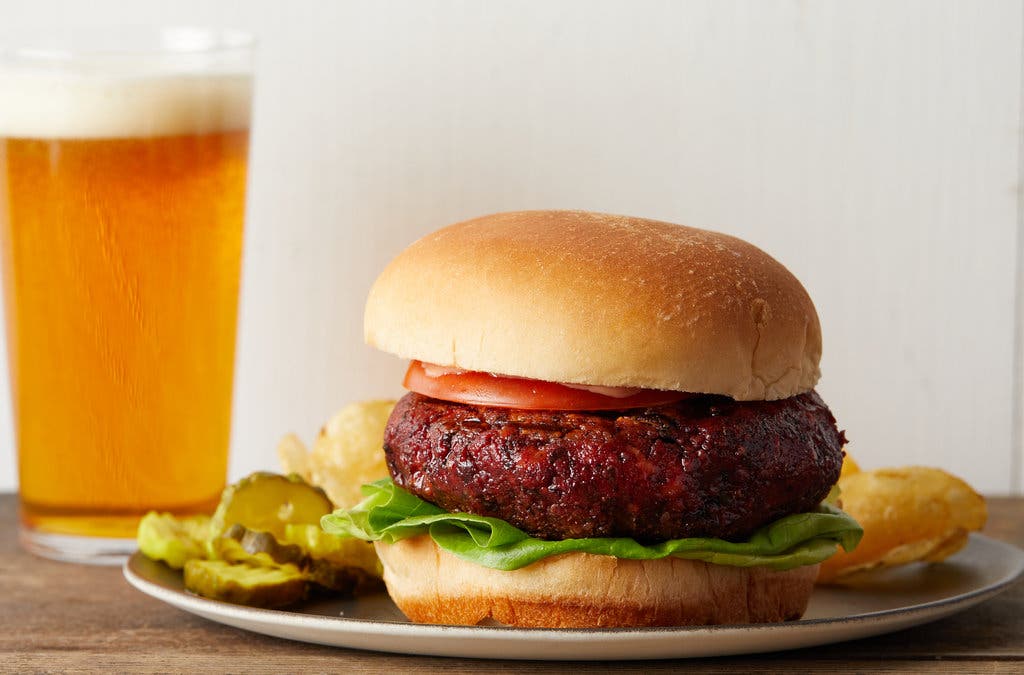
While precision fermentation has been used by the pharmaceutical industry for decades, advances in machine learning and genetics are opening up new food possibilities. According to the Washington, D.C.-based Good Food Institute (GFI), a research organization promoting plant- and cell-based alternatives to animal products, there are more than 88 start-ups using precision fermentation to create a multitude of different products, from dairy proteins to chicken-free eggs, food dyes, vitamins, and even fungi-sourced fats that promise to bring the long-elusive juiciness to plant-based burgers. Better land Milk, which combines Perfect Day’s cow-free dairy proteins with plant-sourced oils, straddles the plant-based—precision fermentation divide in much the same way as Impossible’s plant-based burger, which ‘bleeds’ a deep red, umami-rich heme protein that is also produced by precision fermentation.

The nascent industry, which saw investments of more than $1.5 billion over the past two years, is the missing link when it comes to the widespread adoption of animal-free diets, says Liz Specht, GFI’s vice president of science and technology. “Precision fermentation proteins are the so-called ‘hero ingredients’ bringing plant-based products closer to what consumers are looking for—the appropriate mouthfeel and texture, the creaminess and emulsifying properties that plant-based alternatives have historically struggled with.” In a new study, the Boston Consulting Group estimated that with these kinds of technological advancements, alternative proteins will represent 11% of all protein consumption by 2035, leading to a reduction of 0.85 gigatons of CO2 equivalent worldwide by 2030—almost as much as decarbonizing the aviation industry.
But doing good for the planet doesn’t come cheap, or at least not yet. Better land Milk, which comes in low fat, whole, and creamy versions, will sell for $6.89 a quart, more than twice the price of organic milk, and nearly three times the cost of an almond alternative. Falsetto is betting that climate-aware consumers will be willing to pay the premium, especially since her milk addresses so many consumer concerns over health, functionality, and the environment. “Consumers are thinking about their families and are worried about the future of the planet,” she says. “They’re tired of the trade-offs between taste and health and sustainability.”
Specht, of GFI, says that so far, at least, consumers have been willing to pay two and even three times the cost per gallon and per pound when it comes to new plant-based products. Once companies scale up, prices drop. Falsetto envisions a similar trajectory for her milk and is already talking with sustainability-minded retailers about nationwide distribution. It takes a gallon of water to grow one almond in drought-afflicted California, she points out, and 4.5 gallons of water to get a gallon of milk from a cow.
“That’s just not sustainable,” she says. “If we’re going to do something for our great-great-grandchildren, the mentality needs to change. And when I say we, I mean the industry.” Better land Milk may be more expensive than its competitors, but that is only because the conventional industry doesn’t include the environmental costs. She’s taking care of that up front. “I’m not trying to make a profit now,” says Falsetto. “I’m investing in the future.”