


• Home
  • Team
  • World
  • Cultivated meats
Monday, December 15, 2025
No Result
View All Result
  • Login
Cultivated Food Article and News
  • Cultivated foodTrend
    • All
    • Alternative Meat
    • Alternative Protein
    • Article
    • Cultivated meats
    • Lab-grown meat
    • Plant-based food
    • Seafood
    • Short News

    Chicken Road 2: Il suono che guida la guida silenziosa

    Supercharged Clovers Hold and Win: When Clocks Meet Chaos in Celestial Mechanics

    Supercharged Clovers Hold and Win: Rewiring Decision-Making with Structured Chance

    Goldene Zufallssimulation: Wie Kongruenzgeneratoren Ideen formen

    The Evolution of Efficient Innovation Through Mathematical Insight

    Geometrie der Ordnung: Wie Symmetrie im Traumspiel lebt

    Markov-Ketten und die Kunst schneller, fundierter Entscheidung

    A rapid expansion of the cultured meat market is meeting consumer demand

    Lab-grown meat is in high demand in the APAC region

    The Alternative Protein Revolution: Is India Ready?

    The Alternative Protein Revolution: Is India Ready?

    • Alternative Meat
    • Alternative Protein
    • Article
    • Cultivated meats
    • Lab-grown meat
    • Plant-based food
    • Seafood
  • World
    AdobeStock_2854144561

    “We’re reimagining meat to spare land and resources, but never flavour” Nicolas Morin-Forest said.

    head-74

    Plant-Based Meats Market Is Booming Worldwide | Gold&Green Foods, Maple Leaf Foods, Amy’s Kitchen, Garden Protein International, Quorn Foods and more

    brown-and-white-cow-on-green-grass-field-during-daytime

    The meat paradox: how your brain wrestles with the ethics of eating animals

    Are chicken feathers a greener alternative to polyester and nylon?

    Are chicken feathers a greener alternative to polyester and nylon?

    The Best Veggie Burgers Are Made With Vegetables

    The Best Veggie Burgers Are Made With Vegetables

  • Science
  • Regulations
  • Opinion
  • Short News
  • Business
  • Cultivated Seafood
  • EVENT
  • Technology
  • Cultivated foodTrend
    • All
    • Alternative Meat
    • Alternative Protein
    • Article
    • Cultivated meats
    • Lab-grown meat
    • Plant-based food
    • Seafood
    • Short News

    Chicken Road 2: Il suono che guida la guida silenziosa

    Supercharged Clovers Hold and Win: When Clocks Meet Chaos in Celestial Mechanics

    Supercharged Clovers Hold and Win: Rewiring Decision-Making with Structured Chance

    Goldene Zufallssimulation: Wie Kongruenzgeneratoren Ideen formen

    The Evolution of Efficient Innovation Through Mathematical Insight

    Geometrie der Ordnung: Wie Symmetrie im Traumspiel lebt

    Markov-Ketten und die Kunst schneller, fundierter Entscheidung

    A rapid expansion of the cultured meat market is meeting consumer demand

    Lab-grown meat is in high demand in the APAC region

    The Alternative Protein Revolution: Is India Ready?

    The Alternative Protein Revolution: Is India Ready?

    • Alternative Meat
    • Alternative Protein
    • Article
    • Cultivated meats
    • Lab-grown meat
    • Plant-based food
    • Seafood
  • World
    AdobeStock_2854144561

    “We’re reimagining meat to spare land and resources, but never flavour” Nicolas Morin-Forest said.

    head-74

    Plant-Based Meats Market Is Booming Worldwide | Gold&Green Foods, Maple Leaf Foods, Amy’s Kitchen, Garden Protein International, Quorn Foods and more

    brown-and-white-cow-on-green-grass-field-during-daytime

    The meat paradox: how your brain wrestles with the ethics of eating animals

    Are chicken feathers a greener alternative to polyester and nylon?

    Are chicken feathers a greener alternative to polyester and nylon?

    The Best Veggie Burgers Are Made With Vegetables

    The Best Veggie Burgers Are Made With Vegetables

  • Science
  • Regulations
  • Opinion
  • Short News
  • Business
  • Cultivated Seafood
  • EVENT
  • Technology
No Result
View All Result
Cultivated Food Article and News
No Result
View All Result
Home Cultivated food

How lab-grown meat and insects are changing Australia’s protein industry

by Admin
April 21, 2022
in Cultivated food
Reading Time: 5 mins read
0 0
0
0
SHARES
247
VIEWS
Share on FacebookShare on Twitter

Lab-grown meat

As demand for alternative protein sources grows, Australians are increasingly looking for options that are healthy, sustainable and ethically made.

At CSIRO, we have produced a “protein roadmap” to guide investments in a diverse range of new products and ingredients. We believe plant-based patties, lab-made meat and insects are just some of the foods set to fill Australian fridges by 2030.

The roadmap sketches out the foundations for a future with greater choice for consumers, and better outcomes for Australian producers across all types of protein.
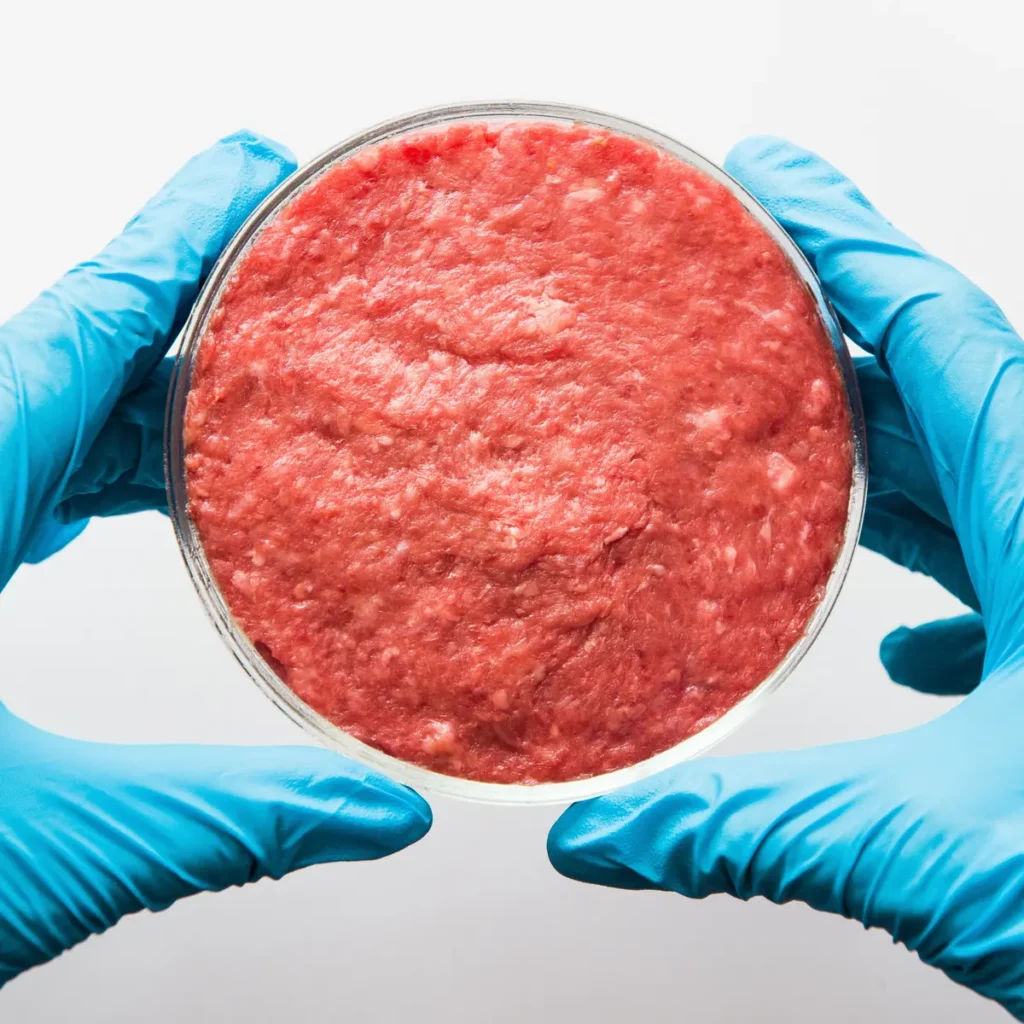
lab grown

Changing protein preferences

Australia is one of the world’s largest per-capita beef consumers, but there has been a steady decline in consumption over the past two decades. The most common reason for eating less red meat is cost, followed by concerns related to health, the environment, and animal welfare. At the same time, meat consumption among the middle class in countries such as China and Vietnam has been rising. This shift in demand is creating an opportunity for protein producers to expand and diversify.

Producing plant-based protein locally

The plant protein industry is still small in Australia. However, it is ramping up rapidly. The total number of plant-based protein products on grocery shelves has doubled over the past year to more than 200. Recent data from the Australian Bureau of Statistics shows demand for these products has increased by about 30% in the past two years.

Plant-based food products are made by processing various plant ingredients (such as wholegrains, legumes, beans, nuts and oilseeds) into food products, including breads, pasta, and alternatives to meat and dairy. Lupins, chickpeas and lentils can be turned into plant-based burgers, while protein powders can be made from faba or mung beans. Most plant-based products available now are either imported or made in Australia using imported ingredients, so there is plenty of room for Australian producers to enter the industry.

The story behind the steak

Meat will continue to be a staple in many people’s diets for years to come. When we do eat meat, Australian consumers are increasingly asking questions about where their meat came from. On this front, “digital integrity” systems can be a useful solution. These systems track everything from the origin of ingredients, to nutrition, sustainable packaging, fair trade and organic certifications. They also keep a record of associated labour conditions, carbon footprint, water use, chemical use, animal welfare consideration, and impacts to biodiversity and air quality.

One example is made by Sydney-based firm NanoTag Technology: a unique micro-dot matrix pattern printed on the packaging of meat products which, when scanned with a pocket reader, verifies the authenticity of the product. Buyers can see the product’s pack date, batch number and factory of origin.

Seafood is also an important source of healthy and low-fat protein. Demand is growing for local, inexpensive white-flesh fish such as barramundi and Murray cod. While Australia produces 11,000 tonnes of white-flesh fish annually, it imports almost 10 times this amount to help meet annual demand. Responding to this demand, the Australian aquaculture industry has ambitions to reach 50,000 tonnes of homegrown produce by 2030.

Man-made meats
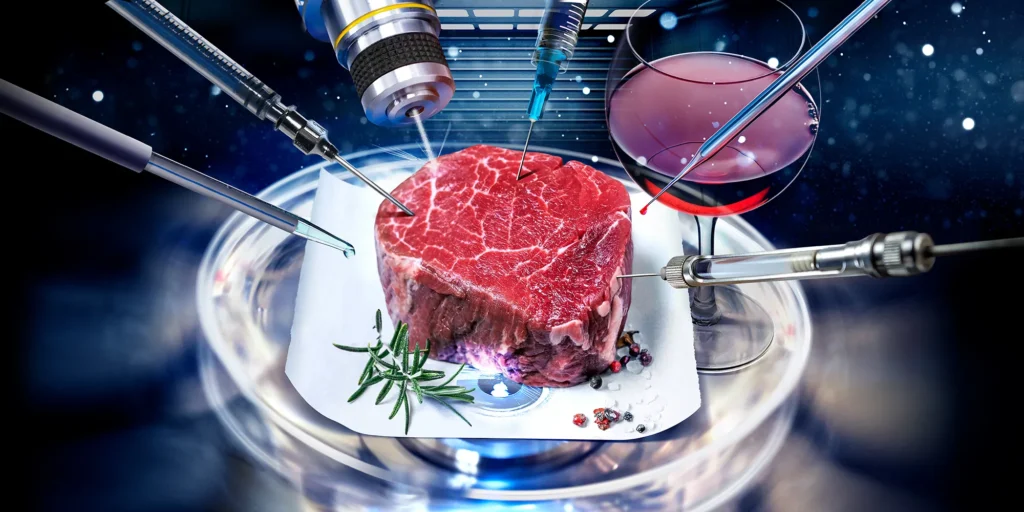
Lab grown

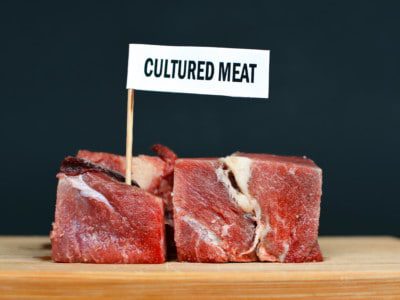
Still want to eat meat, but are concerned about animal welfare or environmental impacts? Cultivated or cell-based meat is biologically similar to the regular variety, but the animal cells are grown in a lab, not a farm.

Australian company Vow is making pork and chicken, as well as kangaroo, alpaca and water buffalo meat using cells from animals. These products are not yet commercially available, though chef Neil Perry did use some of them to create a menu in 2020.

Edible insects

How lab-grown meat and insects are changing Australia’s protein industry Luxembourg prohibits sale of edible insects
Skewered silkworms are a delicacy in of China and Asia.

Edible insects, such as crickets and mealworms, have been part of cuisines around the world for millennia, including Australian First Nations Peoples. Insects have a high nutritional value, are rich in protein, omega-3 fatty acids, iron, zinc, folic acid and vitamins B12, C and E. Insect farming is also considered to have a low environmental footprint, and requires less land, water and energy.

Australian company Circle Harvest sells a range of edible insect products including pastas and chocolate brownie mixes enriched with cricket powder. Protein is vital to our health. However, until now its production has placed strain on the health of most other ecosystems. CSIRO’s protein roadmap offers not only sustainability, but also more choice for consumers and opportunities for Australian producers. Katherine Wynn is the lead economist at CSIRO Futures and Michelle Colgrave is a professor of food and agricultural proteomics at CSIRO.

This article is republished from The Conversation under a Creative Commons license. Read the original article.

Tags: cultivated meatlab-grown meatMARKETING
Previous Post

CellMEAT, a South Korean lab-grown shrimp producer, bags $8.1M Series A funding  

Next Post

Why do we love to hate and hate to love meat?

Admin

Admin

Related Posts

Impossible Foods

Motif FoodWorks moves to revoke patent at center of Impossible Foods dispute

April 21, 2022
0

Motif FoodWorks is challenging the validity of Impossible Foods’ patent for a meat alternative containing heme. Impossible Foods launched its plant-based burger featuring yeast-derived heme in 2016 and received a patent for...

SeaWith Partners with ORF Genetics to Produce Han-Woo Cultivated Beef with Plant-Based Growth Factors

SeaWith Partners with ORF Genetics to Produce Han-Woo Cultivated Beef with Plant-Based Growth Factors

October 3, 2023
0

South Korean biotech SeaWith and Icelandic molecular farming company ORF Genetics are partnering to accelerate the production of cultivated meat with plant-based growth factors. SeaWith is preparing to scale its cultivated meat platform to introduce Han-Woo...

Umiami Selected for French Tech 2030 in Recognition for its Whole Cuts of Plant-Based Meat

Umiami Selected for French Tech 2030 in Recognition for its Whole Cuts of Plant-Based Meat

June 16, 2023
0

Plant-based whole cut pioneer Umiami has been selected to join the French Tech 2030 program, a governmental initiative to strengthen France’s industrial and technological sovereignty.  The 125 selected participants were required to meet at least...

Global Plant-Based Meat Market Valued at USD 10.2 Billion in 2022, Expected to Grow at a CAGR of 20.2% from 2023 to 2033

Global Plant-Based Meat Market Valued at USD 10.2 Billion in 2022, Expected to Grow at a CAGR of 20.2% from 2023 to 2033

May 27, 2023
0

Key Highlights: The global Plant-based Meat Market size was valued at USD 2 billion in 2022 growing at a CAGR of 20.2% from 2023 to 2033.North America dominated the market in 2022Asia...

Load More
Next Post
Meat

Why do we love to hate and hate to love meat?

Leave a Reply Cancel reply

Your email address will not be published. Required fields are marked *

About US

At CultivatedMeats, we’re passionate about the future of food, products, and events that are grown and produced in harmony with nature. We believe in a world where cultivation goes beyond just farming and enters every aspect of our lives.

Cultivated Meats all right reserved text © 2024

Welcome Back!

Login to your account below

Forgotten Password?

Retrieve your password

Please enter your username or email address to reset your password.

Log In
No Result
View All Result
  • Cultivated food
    • Alternative Meat
    • Alternative Protein
    • Article
    • Cultivated meats
    • Lab-grown meat
    • Plant-based food
    • Seafood
  • World
  • Science
  • Regulations
  • Opinion
  • Short News
  • Business
  • Cultivated Seafood
  • EVENT
  • Technology

Cultivated Meats all right reserved text © 2024